Systems biology · MIDD · QSP
Systems biology platform for model-informed drug development
Edik Blais founded ggomics to provide biopharma with mechanistic systems biology models (e.g. signaling dynamics, metabolic networks, spatial microenvironments) and digital twin services:
- Distill multi-omic data into mechanisms clinicians can trust
- Power up biomarker data with multi-scale network simulations
- Get regulatory submissions ahead of the AIxBio curve
Purpose-built systems biology models for disease-specific programs
ggomics is on a mission to transform how biomarker data are communicated to clinical stakeholders throughout the development cycle
Where MIDD is headed
The NIH and FDA actively encourage innovation in multi-scale modeling, digital twins, and MIDD infrastructure.
ggomics is open to academic and industry collaborations to advance efforts aligned with these initiatives:
Enhancing Data Usage and Utility to Advance Biomedical Research
This NIH topic emphasizes: modeling health and disease trajectories, novel biostatistical methods, digital twins, synthetic control arms, pragmatic study designs
Computational Modeling of Complex Processes Across Biological Scales
This NIH topic emphasizes: multi-scale modeling, novel alternative methods (NAMs), predicting outcomes, spatial and temporal, molecular and cellular scales
Model-Informed Drug Development Paired Meeting Program
This FDA program emphasizes: clinical trial simulation, systems pharmacology/mechanistic models, dose selection, context of use, general principles for MIDD
These external links open a new tab to NIH.gov and FDA.gov pages that describe similar modeling approaches that ggomics supports.
Roadmap
Pilot project timeline
Project kickoff and disease scoping meetings
Knowledgebase architecture deployed to client cloud
Public data sourcing and parameterization
Custom bioinformatics pipelines
Comparative multi-omic visualizations
Core signaling/metabolic networks delivered for pilot disease/therapy area
Publication & strategy meetings based on insights from core model simulations
The ggomics platform continues to support your growing pipeline
Multi-scale validation with new omics data
Model expansion into new disease areas
Extension for QSP/MIDD applications
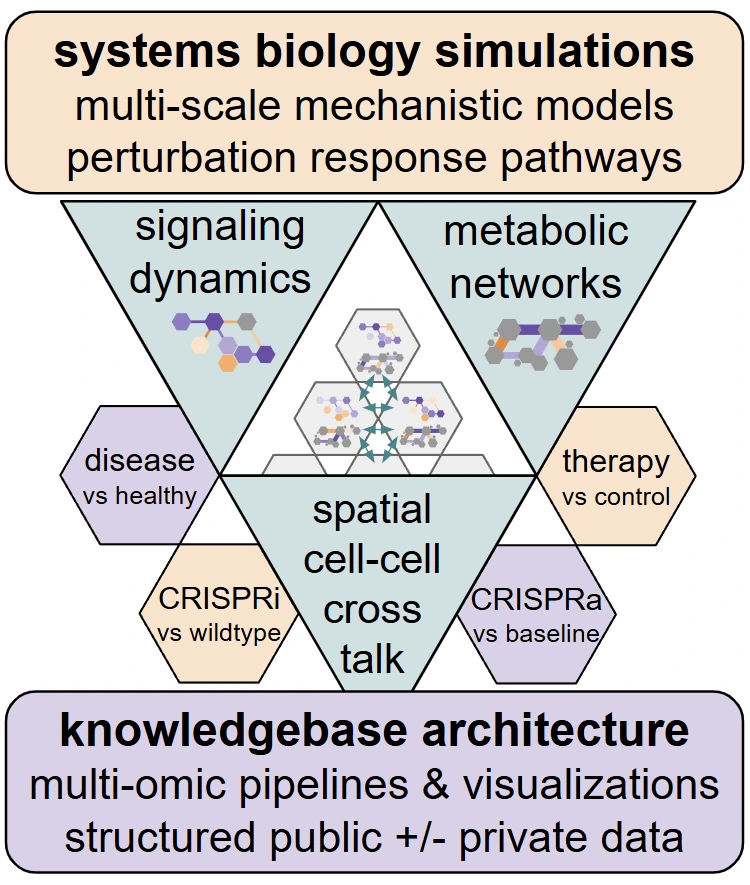
ggomics delivers mechanistic insights at strategic meetings
ggomics deploys modeling infrastructure on your cloud so teams can:
multi-scale mechanistic modeling powered by ggomics
Iteratively curated networks are continually validated to reproduce biological tasks and minimize overfitting
multi-omic integration strategies to up your MIDD/QSP game
Imaging, structural, and functional traits can further strengthen multi-omic links between disease biology and clinical activity
Purpose-built mechanistic modeling platform for your disease-specific program
Discuss a pilot project on your first call
Model objectives are scoped by the study team to capture disease-relevant biology and treatment-related pathways.
Explore Edik's publications by topic

publish intelligence for clinical leaders

translate clinical biomarkers early

consolidate perturbation datasets

genomics & transcriptomics

proteomics & phosphoproteomics

metabolomics & cytokines

oncology

cardiometabolic

preclinical models
Selected work